The licensing of software “cost-effectively” isn’t about the cheapest price. It’s about strategic investment that minimizes long-term risk as well as ensures compliance and expands with growth. Unplanned mixes of grey market windows11 oem essential purchases as well as standalone officelizenzbuy purchases could result in an IT infrastructure that is fragile, unsecure, and challenging to manage. The most important factor to achieve cost-effectiveness is to understand how Windows licensing and Office subscriptions work together with security software. This guide looks beyond the cost to examine the ten key aspects that make up a professional software environment, that’s sustainable and affordable, for a growing company. The guide connects choices from security and desktop OSs server access together.
1. The Foundational rule: Windows 11 Home Has no place in a business.
The most costly and frequent error is buying an inexpensive Windows 11 Home key to use on a business computer. Windows 11 Home cannot join an Active Directory or Azure AD domain, it isn’t equipped with BitLocker encryption for sensitive data, and has no local Group Policy for IT control. The software also requires disruptive updates. If a computer is handling corporate data, the term windows 11 license” must refer to Windows 11 Pro. The small upfront cost in comparison to Home isn’t to be negotiated in terms of security, manageability and professionalism. Businesses that rely on Home licensing is operating in a way that is not regulated by consumer standards, and is a serious liability.
2. Calculator “Hardware Refresh:” OEM vs. Retail.
If you’re purchasing Windows 11 for your business then your choice between OEM and Retail will have implications for the long run. OEM licenses are more affordable upfront, but they expire once the computer is installed for the first time. A Retail license may be transferred. OEM licenses are a good choice for low-cost, disposable PCs which you replace every 3 or 4 years. Retail licenses will save money if the workstation you’re using is of higher quality or if you upgrade your components separately. Calculate the total cost of Ownership (TCO). Retail licenses are $200, with OEM Pro at $140. If the lifetime cost of your PC is $800, the retail cost is an excellent value to allow for the future flexibility.
3. Microsoft 365: The Ecosystem That Delivers Cost-Effectiveness Really Lives.
For businesses that are growing the time for an office license purchase (like Office 2021) is over. Microsoft 365 Premium for Business (approx. Most often, the package that’s most affordable is Microsoft 365 Business. It includes: Windows 11 Pro upgrade rights (solving your `windows 11 lizenz kaufen` need), the full Office suite, 1TB OneDrive cloud storage, business-class email, and–crucially–Intune for device management and Azure AD for identity. This subscription allows for the legalization of the desktop and gives management tools you can’t get with standalone software. It changes IT from being a capital cost (CapEx), into an operating expense that is predictable (OpEx).
4. Windows 7 Upgrade: Compliance and Security Mandates
Companies that still use windows 7, risk a ticking bomb of unsupported applications. Upgrading doesn’t just mean the addition of new features. It also requires the security of compliance and. It’s essential to know that the best way to proceed doesn’t include purchasing a Windows 11 license. It’s a good opportunity to reevaluate your software approach. Microsoft 365 Business subscriptions modernize security. They allow cloud backups as well as remote work. The subscription costs are what you pay for, not a new OS.
5. Knowing “CAL” Shadow cost to future growth.
If you anticipate needing an on-premise server such as windows server 2025to support file sharing, databases, or other line-of-business applications You must plan for Client Access Licenses (CALs). Every device or user who connects to the server requires the license. It is an additional cost of your Windows 11 Pro` desktop license. A small-scale business that is planning to plan for this expansion should include CALs into the long-term budget. Windows 11 Home, which can’t legally access Windows Servers in a commercial context, or unlicensed access is a major possibility of non-compliance in an audit of software.
6. Bundling Security against. the Best of Breed
The complexity of licensing can be affected by the choice you make between Windows Defender and a suite from a third-party, such as Norton 360 or Kaspersky Premium. Microsoft 365 Premium includes enhanced Defender Security and centralized Threat Management. The addition of a third-party application may be redundant. It could increase cost and administration overhead. If you’re looking for a solution that will meet the specific requirements of your regulatory system or if you wish to utilize a third-party platform, then a consistent system is a must. A single license for all workstations will be more cost effective and feasible. The monthly subscription cost isn’t the sole “cost” in relation to security. It could also be the amount of labor required to manage several systems.
7. Grey Market Trap. False economics in licensing.
When you search for ‘office license’ or “windows 11 lizenz buy in unofficial marketplaces Prices appear to be too good to be real. They are typically volume licenses or OEM keys that are in violation of the terms of service. They can also be keys from different countries. Microsoft can deactivate the keys and leave you with insecure and unlicensed software. It is also possible to be punished in the event of an audit. This is a threat that cannot be accounted for in the budget of businesses. In order to get the best value it is necessary to buy from Microsoft Cloud Solution Providers (CSPs) or authorized distributors. This ensures full legitimacy as well as assistance and upgrades rights.
8. PerpetualOffice2021: The Niche for Static Air Gapped scenarios.
The perpetually-operating office lizenz` (e.g., Office Professional 2021) is still a limited business use. It is a license for workstations that do not require cloud services, will never connect to modern management systems, and will use the exact same features that are set for five years or more (until maintenance is finished). It’s extremely rare. The subscription model is far more suitable for small-scale businesses that require cloud-based file storage (Teams, SharePoint), collaboration (Teams), and mobile access. The “cost’ of a perpetual licence is that it locks in software as well as lost productivity gains that cloud services can offer.
9. Modeling Mobility Device Based and. User Based Licensing.
The traditional licensing model is device-bound. (One OEM Windows 11 license per computer). Microsoft 365 uses a user-based licensing model. A single user license can be used to access up to five devices per person (PC, Tablet, Macbook or phone). It is very cost-effective for companies that have mobile employees, hybrid workers as well as those who offer the computer with keyboard. You license the individual but not the machine. When you are planning your licensing strategies be sure to consider the possibility of mobility for your employees. A subscription based on the person who is using it decreases the number of licenses when compared with one that is based on devices.
10. Designing an Coherent Stack to be Audit-Ready.
It is essential to have a software stack that is simple and well-documented. It is also compliant with the law. The most cost-effective option for small-scale businesses of today is typically: Microsoft 365 Business Premium (per user) for Windows 11 Pro, Office Management, Security, and more + Legitimate Retail or OEM Windows 11 Pro licenses for any devices that are not covered by the subscription (e.g., designated kiosks) + A consistent, controlled security system (either via Defender within M365 or a central third-party tool). This stack has a predictable and auditable architecture that is scalable, auditable, and scalable. It can eliminate the “hidden cost” of chaos, such as downtime due to incompatible systems, the loss of data due to insecure security, or exposure to legal liability due to non-compliance. See the recommended windows 11 lizenz kaufen for website advice including microsoft office key, microsoft office with key, microsoft office with key, ms project, windows server 2016 os, windows and office, windows office, office 365 office key, microsoft office 2016, ms visio software and more.
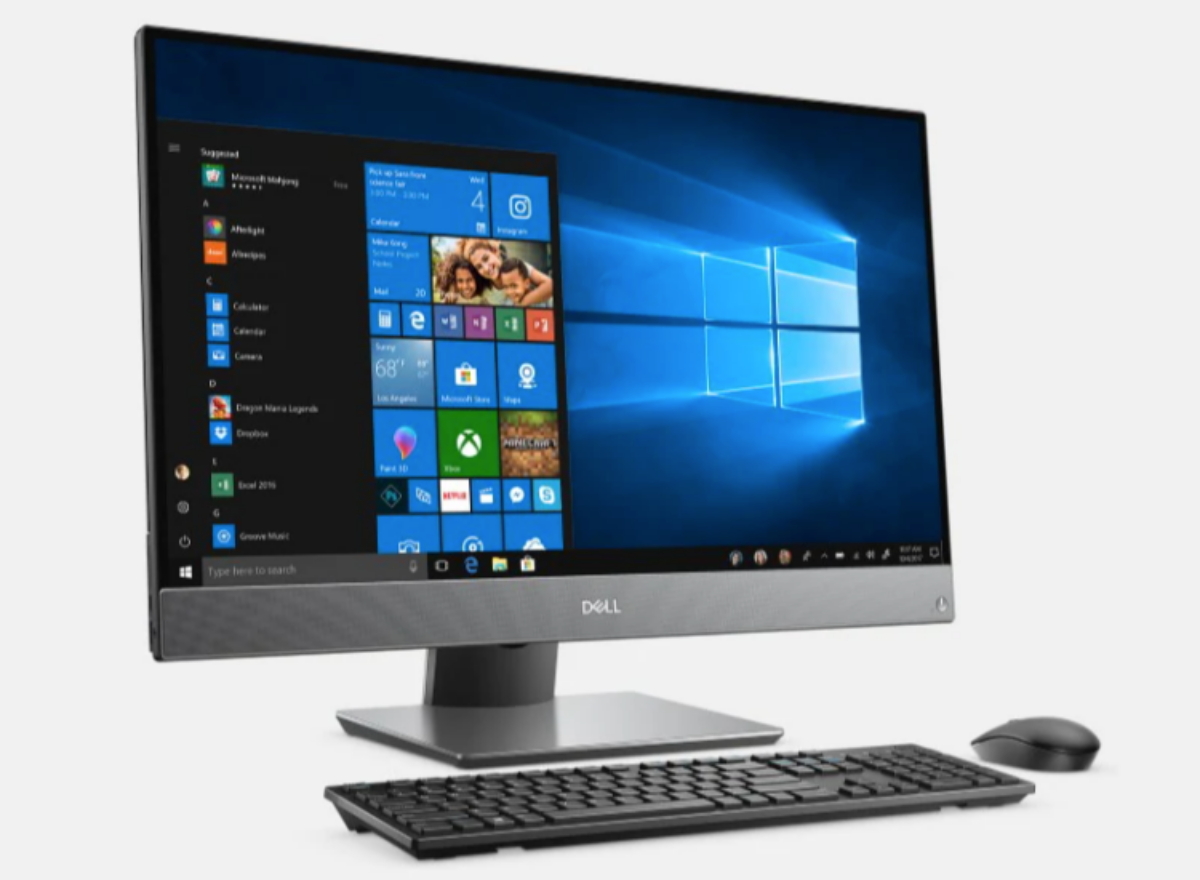
Software Bundles Are They Worth It? Norton 360 Office Deals: A Review.
If you’re looking for the most value, it’s hard to avoid a bundle of programs. These bundles, typically seen when buying a brand new PC or from major retailers offer convenience and savings at a glance. They are usually advertised with huge discounts. However, their real value lies not in the cost, but in the study of licensing options, overlap of features, and the suitability of the bundles for your particular digital ecosystem. Bundles that combine a subscription-based software suite with an annual license can be a mismatch for product management and lifecycle. To assess these deals, you have to take off the layers to know how the bundles are compatible with your current operating system, with your ability to upgrade away from older software (like windows 7) and with your broader requirements for centralized management or for integration with services (like windows 2025). These ten elements will help determine if a bundle is tactical or strategic.
1. The most fundamental difference between perpetual licenses and subscriptions.
The biggest flaw in the majority of norton 360 and Office bundles is the conflict in licensing models. Norton 360 is a recurring annual subscription. Office 2021) is an example of a perpetual license. This results in a different life cycle: your antivirus needs renewal every year, while your Office suite is static until you decide to purchase a new version (often 5+ years later). The “savings”, which are only available for a single time are locked into a perpetual Office suite and don’t reduce the price of your Norton subscription. This is a separate deal and not an integrated one.
2. Bundles are often used to mask the “Which Office?” Question.
The term Office has ambiguity. What exactly is it? Is it the permanent Office Professional suite (which does not include Outlook) or the Office Home & Student Edition which is limited to commercial usage and is less powerful? A bundle could advertise “Microsoft Office” but deliver the latter, which is inadequate for most business contexts. It is important to confirm the exact product code before you decide to value the bundle. A bundle that does not include Home & Student that does not include Outlook email is worthless.
3. Your Windows License is a basis for confidence.
Both Norton 360 and Microsoft Office rely on a reliable, stable fully-updated Windows operating system in order to operate optimally. If your PC runs on a shaky windows11 OEM key that was purchased from a grey-market `windows 11 lizenz buy site, the solidity of the foundation is compromised. If you install productivity and security applications on an OS that could be compromised and your foundation is made of sand. The value of the bundle will be lost if the platform core is compromised or disabled. This can affect the licensing of two bundles.
4. Windows 11: Security built-in and redundancy (Windows 11)
Windows 11 includes robust, cloud-integrated security in Windows Defender. Norton 360 is a feature overlapper that can cause conflicts with the system resources. The bundle might force you to run and pay for a security suite that you don’t require. It’s important to begin the evaluation by assessing the threat model and user behavior. Would the included Defender suffice or do you need Norton’s other features (such such as password management, VPN or dark web monitoring)? Most often, the bundle takes the first without asking.
5. The “Upgrade Windows 7 Context”: A possible bridge for the short-term.
A bundle like this could be of temporary value to a user who finally migrates to “Windows 7”. It offers both the current Office as well as the Norton security suite with one purchase, easing transition shock. It is, however, an unwise bridge. Microsoft 365 offers continuously updated Office software and improved security features (through Defender on Endpoint, in the higher plans) all in a single month-long, manageable subscription. This bundle is a great alternative to getting rid of Windows 7 but could lock users into an old version (perpetual Office).
6. Management Overhead For Businesses Management Overhead For Businesses: The Anti-Synergy.
It’s a major headache for any small business to own distinct Norton 360 Office licenses. The management console is not unifying. Norton renewals have to be managed by hand, Office installations managed manually and two portals for vendors dealt with. Microsoft 365 Business Premium, however handles all of these aspects from one administrator center. The perceived savings of bundles quickly disappear due to increased IT costs.
7. It isolating the perpetual office The cloud ecosystem is missing.
The office license included in these bundles is an island. It doesn’t include OneDrive cloud storage, Microsoft Teams, or the co-authoring and collaborative features in real-time that define modern work. It’s a static desktop-only software. Bundled together with Norton you get a security package that offers its own cloud backup and creates an uncoordinated user experience. If you’re using two subscriptions (M365), they could be integrated seamlessly.
8. Kaspersky premium’s different strategy: an alternative to Kaspersky.
Kaspersky Premium is not as often bundled in Office than Norton. It is a direct competitor in the space of security. Its main value proposition is its superior heuristics detection and low system impact. This appeals to the most demanding users. When evaluating Norton+Office, the main question to ask is: “Would my needs be better served if I bought a perpetual Office and paired it with another security suite like Kaspersky? The bundle does not allow this.
9. Zero Integration Advanced Infrastructure (Windows Server, Cals).
These consumer/business-consumer bundles exist in a silo completely separate from organizational IT infrastructure. They are not compatible with Windows Server 2025 or the cals. The Group Policy cannot be used to manage them from the server. They are designed for individual or very small office use. If you’re growing your business or a need for an official server, this bundle is a costly investment.
10. The Cost of Strategic Subscription in comparison to. Bundle Pricing.
Conduct a three-year Total Cost of ownership (TCO) analysis to determine the real value. Compare: Bundle is the cost of a one-time bundle plus (Norton 360’s annual subscription time 3) + the price of the following Office permanant license, which is expected to be in 2026. Compare: Microsoft 365 Business Basic/Premium = (Monthly subscription 36 months). Subscriptions usually include up-to-date Office software, 1TB OneDrive Cloud Storage, Business Email, and a variety of advanced Security/Management tools. The “discount”, which was offered upfront, often disappears at this point and leaves you with less functional and difficult-to manage software. If you require more than the simplest and isolated computing capabilities, the bundle’s value is just a myth. Check out the best kaspersky premium for site examples including microsoft visio software, outlook software download, product keys, windows & office, windows office, microsoft office download, ms project, windows server 2016 os, key 365 office, office key and more.
